How to Build a Versatile Workout Wardrobe
A good workout wardrobe should make getting dressed easier, not give you another reason to stare at your closet for ten minutes before heading to the gym. The goal is not to own a drawer full of leggings, matching sets, and colorful tops that only work with one particular outfit. A versatile workout wardrobe is a carefully selected collection of pieces that can handle different workouts, temperatures, schedules, and even parts of your day outside the gym. Recent activewear guides published in 2026 increasingly focus on the same principle: fewer, more adaptable pieces that can move between training and everyday life.
The best place to start is by thinking about your actual lifestyle rather than an imaginary fitness routine. If you lift weights three times a week, practice yoga, walk regularly, and occasionally run, your wardrobe should reflect those activities. You do not need the same clothing for every session, because different forms of movement place different demands on your body and clothing. At the same time, you should avoid buying highly specialized pieces unless you genuinely use them. A versatile wardrobe works because each item has a purpose while still giving you multiple styling options.
What Makes a Workout Wardrobe Versatile?
Versatility means a single piece can work in several situations without compromising comfort or performance. A pair of black leggings, for example, might work for strength training, yoga, walking, travel, and casual errands. A simple fitted tank can work during a workout and later underneath an oversized shirt or lightweight jacket. A neutral zip-up can become a warm-up layer at the gym, a travel layer, or part of a casual outfit. Current capsule activewear recommendations commonly emphasize this mix-and-match principle because coordinated pieces can create substantially more outfits without requiring a larger wardrobe.
The important distinction is between versatile activewear and clothing that simply happens to be comfortable. A soft oversized sweatshirt might be excellent for lounging, but it may not be suitable for a sweaty workout. Similarly, highly technical running clothing may perform exceptionally well but look out of place when you are meeting someone for coffee. Versatility sits somewhere between those extremes. You want clothing that performs when you move and still looks intentional when you are not exercising.
Think Beyond the Gym
Before buying anything, ask yourself a simple question: Where else could I wear this? If the answer is only one workout, the piece should have a very specific reason for earning space in your wardrobe. If you can imagine wearing it for training, travel, errands, walks, or casual plans, it has much stronger wardrobe value.
This mindset is especially useful if you are building an athleisure wardrobe. Recent Indian athleisure guides highlight the growing importance of clothing that can transition between exercise and everyday activities, particularly because heat, commuting, and busy schedules can make changing outfits multiple times inconvenient. The result is a wardrobe that feels less like a collection of gym uniforms and more like an extension of your everyday style.
Start With Your Actual Workout Routine
The biggest mistake you can make is shopping for the person you think you are going to become rather than the person you currently are. You might imagine yourself running every morning, attending five different classes, or becoming a regular at the gym, but your wardrobe should first serve your existing routine. Look at your typical week and identify the activities you actually do. If yoga is a regular part of your week, prioritize flexible leggings and comfortable tops. If strength training dominates your schedule, focus on secure waistbands, durable fabrics, and tops that stay in place.
Think about frequency as well. Someone who trains twice a week does not need the same number of clothes as someone who trains six days a week. Your laundry schedule matters too. A smaller wardrobe can work beautifully if you wash your workout clothes frequently. Someone who prefers doing laundry once a week will need more rotation pieces. A current 2026 capsule activewear guide suggests that around 8 to 10 carefully selected pieces can provide a practical foundation for many people, while larger wardrobes make sense for higher training frequency or more varied activities.
Match Clothing to Your Training
Different workouts require different levels of support, coverage, mobility, and breathability. Yoga and Pilates generally require unrestricted movement and fabrics that stretch comfortably without digging into the body. Running and HIIT can require stronger support, moisture management, and clothing that stays secure during repetitive movement. Strength training requires durability and a fit that will not constantly distract you while you squat, hinge, press, or pull.
You do not need an entirely separate wardrobe for every activity. Instead, identify the performance requirements that overlap between your workouts. For example, a good pair of leggings may work for both yoga and strength training. A breathable tank may work for lifting, walking, and cardio. A high-support sports bra can cover running and HIIT sessions. This approach gives you specialization where it matters while keeping the overall wardrobe compact.
Build Around a Small Number of Core Pieces
Start with your bottoms because they often determine the rest of the outfit. A practical wardrobe might begin with two or three pairs of leggings, one or two pairs of shorts or biker shorts, and one relaxed bottom such as joggers. Current 2026 activewear capsule recommendations commonly use two to three leggings as a foundation, supported by shorts, tops, sports bras, and one layering piece.
Choose your first pair of leggings in a color you can wear repeatedly. Black is an obvious choice because it works with almost every top and can transition easily outside the gym. Your second pair can introduce another neutral such as charcoal, navy, brown, or olive. A third pair can bring in a different silhouette or color if your routine justifies it. Avoid buying three nearly identical pairs before you know what fits and performs best for you.
The Essential Bottoms
When shopping for workout bottoms, pay attention to more than appearance. The waistband should remain secure without becoming uncomfortable. The fabric should provide enough stretch for your movement while maintaining its shape. For activities involving squats, lunges, stretching, or deep bends, opacity matters because a fabric that looks fine while standing may behave very differently once you start moving.
Shorts are particularly useful in warmer climates or high-intensity sessions. Look for secure waistbands, comfortable inseams, and pockets if you need to carry a key or phone. Joggers have a different role because they can work for warm-ups, recovery days, travel, and casual outfits. Instead of buying every silhouette available, choose bottoms that fill different practical roles.
Choose Workout Tops That Mix Easily
Your tops should create variety without forcing you to purchase a different outfit for every bottom. Two or three tops can already create significant variation when paired with multiple bottoms. Start with versatile colors such as black, white, grey, navy, or muted earth tones. Then add one color that reflects your personal style if you want more visual interest.
A fitted tank can be useful for strength training because it allows you to move your arms freely and makes it easier to monitor your form. A relaxed performance tee can work for walking, warm-ups, travel, or lower-intensity sessions. A long-sleeve top can add another layer for cooler mornings or outdoor workouts. The key is to avoid tops that depend on one specific bottom to look good.
Look at the neckline, sleeve length, hemline, and fabric weight as well. A top that constantly rides up during movement will quickly become a piece you stop wearing. A beautiful crop top that does not provide the coverage you prefer will spend more time in your drawer than on your body. The most versatile pieces are usually the ones you can put on without thinking twice.
Get the Right Sports Bras
Sports bras deserve more attention than they often receive because support requirements change dramatically between activities. A comfortable medium-support bra may be excellent for yoga, Pilates, walking, or strength training, while running and high-impact workouts may require substantially more support. Buying one style and expecting it to perform equally well everywhere is an easy way to end up uncomfortable.
A practical wardrobe can include two medium-support options and one higher-support option if you regularly participate in high-impact activities. Look for breathable materials, comfortable straps, a secure band, and a fit that does not restrict your breathing or movement. If you regularly train in hot conditions, quick-drying materials can also make a significant difference.
Match Support to Activity
Think about your sports bra collection as equipment rather than simply clothing. The right support can make movement feel easier because you spend less time adjusting your clothing. For low-impact movement, prioritize comfort and flexibility. For high-impact activities, prioritize stability and support. For strength training, look for a balance between support and freedom of movement.
Fit should always come before appearance. A beautiful sports bra that pinches, shifts, or restricts your movement is not a good purchase. Try different strap configurations and band widths if possible. Your body should be able to move naturally without you constantly thinking about the garment.
Choose Fabrics Based on Performance
Fabric can completely change your experience during a workout. Cotton can feel soft and comfortable, but it absorbs sweat and can become heavy during intense sessions. Technical synthetic blends are commonly used in performance activewear because they can provide stretch, durability, and moisture management. For training, look for materials that feel comfortable against your skin and maintain their structure after repeated washing.
There is no single “best” activewear fabric for every person or workout. A soft, stretchy fabric may be ideal for yoga or Pilates, while a lightweight moisture-managing material may feel better during running or HIIT. You also need to consider climate. In hot and humid environments, breathability and sweat management become particularly important. Indian activewear guidance published in 2026 specifically emphasizes performance fabrics because climate can make fabric choice more consequential.
Pay attention to fabric recovery as well. Stretching is useful, but clothing should return to its original shape instead of becoming loose after a few wears. If leggings become baggy at the knees or a waistband loses its structure quickly, they are not delivering good long-term value.
Create a Simple Activewear Color Palette
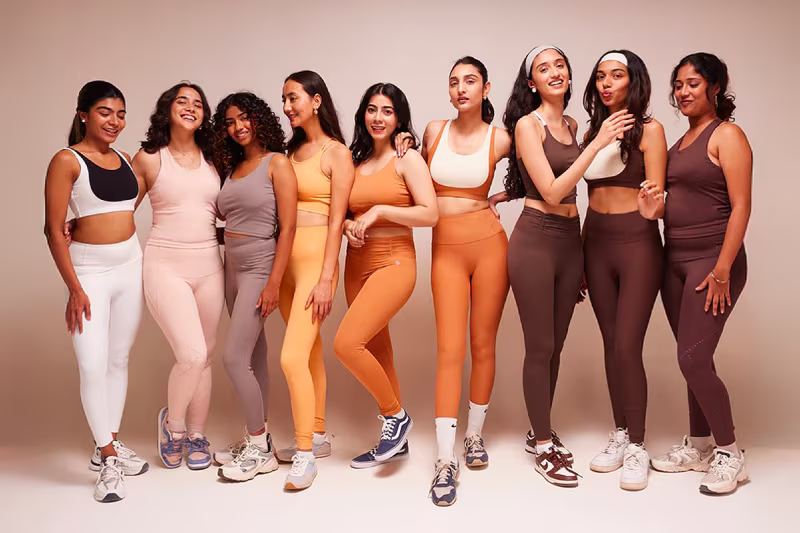
A coordinated color palette is one of the easiest ways to make a small wardrobe feel much larger. You do not need every item to match perfectly. Instead, choose two or three core neutrals and introduce one or two accent colors. Black, grey, navy, cream, olive, brown, and muted blue can work particularly well as foundations because they are relatively easy to combine.
Think about your wardrobe as a system. If you own three bottoms and four tops, ideally most tops should work with most bottoms. That creates more combinations without requiring additional clothing. Recent capsule wardrobe guides similarly emphasize coordinated color palettes because the entire point of a capsule is to make individual pieces interchangeable.
Why Neutrals Make Outfits Easier
Neutrals reduce the number of decisions you need to make. A black legging can support a bright tank, a white tee, a muted green crop, or a grey sweatshirt. A charcoal bottom can work with many of the same pieces. This does not mean your wardrobe has to be boring. It means you can use one or two statement colors strategically instead of making every item compete for attention.
If you love color, use it intentionally. Perhaps your foundation is black and grey, your secondary colors are olive and cream, and your accent is burgundy or blue. Now you have personality without sacrificing versatility.
Add Layering Pieces
A workout wardrobe becomes much more useful when you include layers. A lightweight zip-up, sweatshirt, hoodie, oversized shirt, or jacket can completely change an outfit while also solving practical problems such as cold mornings, air-conditioned studios, or post-workout commutes. One strong layering piece can often do more for wardrobe versatility than buying another pair of leggings.
Choose a layer that works with most of your existing colors. A neutral zip-up is particularly useful because you can wear it before training, during warm-ups, and outside the gym. An oversized shirt can create a more casual athleisure look over a fitted tank and leggings. A lightweight jacket can also provide an easy transition between seasons.
Current activewear collections increasingly emphasize pieces designed for both performance and everyday use, including lightweight jackets, sweatshirts, and relaxed trousers. That reflects a broader shift toward clothing that does not have to stop being useful when your workout ends.
Choose Versatile Workout Shoes
Shoes deserve their own category because versatility should never mean ignoring the requirements of your activity. A training shoe can be useful for strength workouts and general gym sessions, while running requires footwear designed specifically for running mechanics. Yoga and Pilates may not require dedicated athletic shoes at all.
If you participate in several activities, you may eventually need more than one pair. The mistake is trying to force one pair of shoes to perform every possible job. Choose footwear based on your most frequent activities first. Then add another pair when your training actually requires it.
For everyday versatility, neutral footwear can also make styling easier. Black, white, grey, or muted tones generally work well with coordinated activewear. But performance should always come first. Your shoes are one area where fashion should not override function.
Make Your Wardrobe Work From Gym to Street
The easiest way to create a gym-to-street wardrobe is to choose pieces that already have a clean, intentional silhouette. A simple pair of leggings with a fitted tank and oversized shirt can look very different from the same leggings worn with a technical gym tee. Small changes in layering, footwear, accessories, and proportions can shift the overall impression.
You do not have to wear every workout piece outside the gym. Some garments are designed specifically for exercise, and that is perfectly fine. The goal is to identify the pieces that naturally transition. A polished jogger, neutral tank, oversized button-down, clean sneakers, and lightweight jacket can form the bridge between activewear and everyday clothing.
Recent Indian athleisure coverage describes this gym-to-street flexibility as a defining characteristic of the category rather than simply an accidental benefit. This makes versatility a useful buying criterion: ask whether an item can support your day beyond the workout.
Prioritize Fit Over Trends
Trends can be fun, but fit determines whether you actually wear something. A fashionable legging that rolls down every time you squat is still a bad legging. A trending top that constantly needs adjustment will eventually frustrate you. The most versatile wardrobe is built around pieces that make movement feel natural.
Pay attention to waistbands, armholes, inseams, shoulder seams, and overall length. Different body shapes can require different cuts, so do not assume that a particular silhouette is universally better. If possible, test garments through a few movements before deciding. Squat, bend, raise your arms, walk around, and sit down.
Fit also changes depending on the intended activity. A relaxed tee can be excellent for walking but annoying during certain strength movements. A compression-style top can be useful for training but less appealing for casual wear. Choose the fit according to both your body and the job you expect the garment to perform.
Buy for Different Weather Conditions
Your workout wardrobe should reflect your climate. If you live somewhere warm for much of the year, lightweight tanks, breathable tops, shorts, and moisture-managing fabrics may deserve priority. If you train outdoors during cooler months, you will need layering options. If your environment changes dramatically through the year, build your core wardrobe first and add seasonal pieces only when necessary.
Layering gives you flexibility without requiring a completely separate wardrobe for each season. A tank can work alone during a hot workout and underneath a jacket when temperatures fall. Leggings can work across much of the year, while shorts become particularly useful in warmer conditions.
Weather also affects how frequently you may need to wash your clothing. Hot conditions can mean heavier sweating, which means a larger rotation may make practical sense. Build your wardrobe around real usage rather than an arbitrary number of pieces.
Build a Workout Wardrobe on a Budget
You do not need to buy everything at once. Start with the pieces that solve your biggest problems. If you only have one pair of reliable leggings, buy another before buying a fourth sports bra. If you already have enough tops but lack a useful layer, buy the layer. This approach keeps your spending connected to actual needs.
A useful way to judge a purchase is cost per wear. A more expensive pair of leggings that you wear twice a week for a year can be better value than a cheaper pair that loses its shape after several weeks. Current activewear pricing varies widely, with premium pieces often costing considerably more than mid-range alternatives, making durability and frequency of use important considerations when comparing purchases.
You can also build gradually. Start with neutral essentials, test what you like, and then add colors or specialized pieces. This prevents you from spending heavily on a particular fabric or silhouette before knowing whether it actually works for you.
Avoid Common Activewear Shopping Mistakes
One of the most common mistakes is buying complete matching sets every time. Matching sets look polished, but if every piece only works with its matching partner, you are creating a larger wardrobe with fewer combinations. Separates usually give you more flexibility.
Another mistake is buying too many statement colors and prints. A bold pattern can be fun, but several highly distinctive pieces may be difficult to combine. Another issue is buying clothing because it looks good online without considering the activity it is meant to support. A garment can photograph beautifully while still being uncomfortable, restrictive, transparent, or poorly suited to movement.
Do not ignore what you already own. Before shopping, empty your activewear drawer and separate pieces into three groups: wear regularly, occasionally wear, and never wear. The third category tells you more about your future shopping decisions than a trend report does. If you repeatedly avoid a certain cut, fabric, or fit, stop buying it.
How Many Workout Clothes Do You Actually Need?
There is no universal number because your training frequency, laundry habits, climate, and workout variety all matter. A person training three times a week can operate comfortably with a relatively small capsule. Someone training six days a week may need more rotation pieces, particularly if they sweat heavily or cannot wash clothes frequently.
As a starting point, you could build around two or three leggings, one or two shorts, three tops, two medium-support sports bras, one high-support sports bra, one layer, and one versatile pair of training shoes. That gives you a functional foundation without creating unnecessary duplication. Current 2026 activewear guides commonly recommend roughly 8 to 12 pieces as a practical capsule range, depending on training frequency and activity variety.
The exact number matters less than whether your wardrobe covers your real week. If you constantly run out of clean sports bras, you need more sports bras. If you have six leggings but only wear two, you probably need fewer leggings and better selection.
Create More Outfits With Fewer Pieces
The real test of versatility is how many useful combinations your wardrobe creates. Imagine having three bottoms and four tops. If most of those pieces coordinate, you already have the foundation for many different outfits without buying fourteen separate garments. Add two sports bras, a layer, and different shoes, and the possibilities expand again.
Try planning your outfits around formulas rather than individual looks. A fitted tank plus leggings can become your strength-training formula. Shorts plus breathable tee can become your hot-weather formula. Leggings plus long-sleeve top and jacket can become your outdoor formula. Leggings plus tank and oversized shirt can become your gym-to-street formula.
This is why capsule wardrobes work so well for activewear. The goal is not minimalism for its own sake. It is maximum utility from each piece. Several current 2026 activewear guides use this mix-and-match approach as the foundation of a versatile workout wardrobe.
Take Care of Your Workout Clothes
A versatile wardrobe only works when your clothes remain wearable. Workout garments regularly deal with sweat, stretching, friction, and frequent washing, so care has a direct impact on how long they last. Always check the garment’s care label because fabrics and construction differ.
Avoid treating all clothing exactly the same. Some technical fabrics benefit from gentle washing and lower heat. Excessive heat can affect elasticity and fabric performance. Washing sweaty clothing promptly can also help prevent persistent odors from developing.
Do not underestimate drying. High heat can be particularly hard on elastic fibers over time. Air drying may take longer, but it can help reduce unnecessary stress on performance garments. If you invest in activewear because you want durability, your washing routine should support that investment.
When Should You Replace Activewear?
Even high-quality activewear eventually needs replacing. Look for practical signs rather than replacing items simply because a new collection has launched. If leggings become transparent, the waistband no longer stays secure, fabric loses significant elasticity, seams start failing, or persistent odors remain after washing, the garment may have reached the end of its useful life.
Sports bras deserve particular attention because their support can gradually change as elastic fibers wear out. If a bra no longer provides the stability it originally did, especially during higher-impact activity, it is time to reconsider it. The same principle applies to shoes: visible wear, reduced comfort, or changes in support can signal that replacement is needed.
A versatile wardrobe is not about keeping every item forever. It is about making deliberate purchases and getting meaningful use from them. When something stops performing its job, replace it based on need rather than fashion.
Conclusion
Building a versatile workout wardrobe is ultimately an exercise in intentional shopping. You do not need dozens of leggings, endless matching sets, or a different outfit for every workout. Start with your actual routine, identify the activities you perform most often, and build around versatile essentials that can handle more than one situation.
Focus on fit, performance, comfort, color coordination, and durability before trends. Choose a few reliable bottoms, enough tops for your laundry routine, sports bras that provide the appropriate level of support, useful layers, and footwear suited to your activities. Then make sure most pieces can mix and match.
The strongest workout wardrobe is the one you actually use. If getting dressed takes seconds, your clothes feel good during movement, and the same pieces can work for training, travel, errands, or casual plans, you have built something more valuable than a large activewear collection. You have created a wardrobe that supports the way you really live.
FAQs
1. How many workout clothes should I own?
For many people, 8 to 12 well-chosen pieces are enough for a practical workout capsule. Your ideal number depends on how often you train, how much you sweat, your laundry schedule, and how many different activities you do. Start smaller and add pieces when you identify an actual gap rather than buying according to a fixed number.
2. What colors are best for a versatile workout wardrobe?
Start with two or three neutrals such as black, grey, navy, cream, or brown. Add one or two accent colors if you want more variety. A coordinated palette makes it easier to mix tops and bottoms, which gives you more outfits from fewer pieces.
3. Can I use the same workout clothes for different exercises?
Yes, as long as the clothing meets the requirements of each activity. A good pair of leggings may work for yoga, strength training, and walking, while a breathable tank may work for lifting and cardio. However, high-impact activities such as running may require more specialized support and footwear.
4. Should I buy matching workout sets?
Matching sets can be useful, but they should not become the foundation of your entire wardrobe. If you want maximum versatility, prioritize separates that work together. A matching set can then function as one polished outfit while each individual piece can also be combined with other items.
5. How can I make activewear look less like gym clothes?
Focus on clean silhouettes, coordinated colors, simple layers, and versatile footwear. An oversized shirt, lightweight jacket, polished joggers, or neutral sneakers can change the overall appearance of an outfit. The easiest approach is to choose activewear pieces that already have a simple, everyday aesthetic rather than relying entirely on accessories to transform them.